Subscribe via email

Enter your email address for a daily tech summary via email:

Delivered by FeedBurner

Wednesday, January 13, 2016

Here’s the people, brands, and products that won the attention war at CES 2016

Here’s the people, brands, and products that won the attention war at CES 2016:

CES 2016 drew more than 170,000 attendees.

ScribbleLive has figured out which people, brands, products, and categories commanded the most attention at the 2016 International CES, the big tech trade show in Las Vegas last week. The company analyzed data from more than 100 million articles from news, blog, and social media sources to identify what grabbed the most attention.

The CES Influence Report said Apple, Samsung, and Blackberry gathered a lot of attention at the show. Gamers in particular were glued to news about the Oculus Rift virtual reality headset. Apple didn’t actually appear at the show (as it never shows up), but it stole some of the attention when Apple executive Phil Schiller announced that the company generated $20 billion in sales in 2015 from the App Store. Samsung scored attention for its 11-inch Chromebook 3, and Oculus VR founder Palmer Luckey drew a lot of attention for his comments around the Oculus VR’s launch and pricing.

Here’s the verdict below on the categories that got the most attention. Mobile was the winner, but gaming, cybersecurity, computers, and VR also ranked pretty high.


The product categories that got the most attention at CES 2016.


Above: The product categories that got the most attention at CES 2016.

Image Credit: ScribbleLive
And here’s the rankings on people. Not all of that attention was good. Palmer Luckey, founder of Oculus VR, stirred some controversy when he said the $599 pricing for the Oculus Rift was cheap. He had to backtrack and apologize, as the price was actually above what a lot of people were expecting. Ford CEO Mark Fields came in second. That makes sense, since he opened the show with the first press conference and noted that Ford would launch 13 electric vehicles by 2020.

But Schiller of Apple and Mark Zuckerberg of Facebook came in third and fourth, and they weren’t even at the show. Zuckerberg probably scored high for a post he wrote on artificial intelligence and VR.


The people who got the most attention at CES 2016.


Above: The people who got the most attention at CES 2016.

Image Credit: ScribbleLive
And here’s the top brands that had the biggest impact. Ford, as we noted, had the first press conference and grabbed a lot of notice from it.


Top brands at CES 2016


Above: Top brands at CES 2016.

Image Credit: ScribbleLive
As for the top two devices that people want, the winners were the Oculus Rift and the Apple Watch. The latter, again, was not on display at CES 2016.

ScribbleLive said it identified opinions and reactions to the various product categories, people, and brands featured at the event. It calculated a proprietary influence score (the “attention index”) based on the people or entities that reacted to an announcement. This was weighted by their influence on a given theme; the credibility of the outlet where the reaction was published or consumed; and the volume of reactions generated by the opinions within the studied timeframe of January 1-8, 2016.


CES2016 - 6


a2t.imgmf.gif


Original enclosures:


Scientists develop batteries that won’t explode, using spiky nanoparticles

Scientists develop batteries that won’t explode, using spiky nanoparticles:

battery nano


We’ve been waiting patiently for a breakthrough in battery technology, but thus far what we’ve gotten is a series of incremental improvements to existing lithium-based cells. We’re packing more power than ever into […]


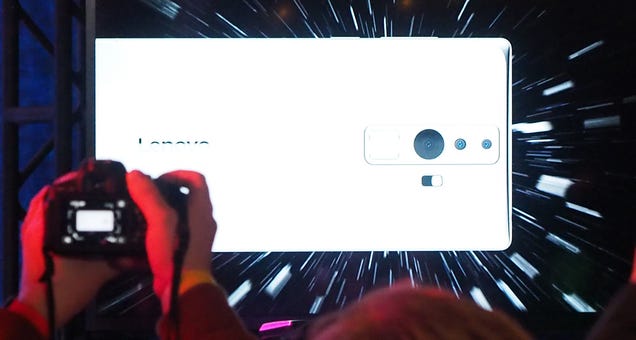
Lenovo's Making a Consumer Phablet Using Google's Crazy Project Tango Tech

Lenovo's Making a Consumer Phablet Using Google's Crazy Project Tango Tech:

ammogwk2zsngchowp30h.jpg
Lenovo and Google have been working together for a year to find a mainstream use for Google’s experimental Project Tango technology. Today we’re getting information about the very first Google Tango device for consumers. They’re actually gonna do it. This is very ambitious.

Read more...


a2t.imga2t2.imgmf.gif


Microscopic 3D-Printed Gold Walls Could Make More Sensitive Touchscreens

Microscopic 3D-Printed Gold Walls Could Make More Sensitive Touchscreens:

pxn2f8oaa9gujo9q971q.png


Microscopic 3D-Printed Gold Walls Could Make More Sensitive Touchscreens


Touchscreens use a mesh of almost-transparent electronics to detect where they’re being touched. Now, a new microscopic 3D printing technique could provide greater transparency and higher sensitivity than the existing state-of-the-art.

Read more...


a2t.imga2t2.imgmf.gif


Tuesday, January 12, 2016

Gartner: Global PC shipments fell 8.3% in Q4 2015, Apple only company in top 5 to see growth

Gartner: Global PC shipments fell 8.3% in Q4 2015, Apple only company in top 5 to see growth:

People check out the new MacBook Pro 13-inch.

The PC market ended its poor year with another negative quarter. Both Gartner and IDC agree: PC shipments are down globally.

Gartner estimates worldwide PC shipments fell 8.3 percent to 75.7 million units in Q4 2015. The top five vendors were Lenovo, HP, Dell, Asus, and Apple.

As you can see in the chart below, Gartner says Apple was the only company among the top vendors that experienced an increase in PC shipments. Acer saw particularly poor results with double-digit declines.


gartner_pc_shipments_q4_2015


IDC, meanwhile, estimates worldwide PC shipments dropped 10.6 percent to 71.9 million units in the fourth quarter. The top five vendors in IDC’s results were Lenovo, HP, Dell, Asus, and Apple.

IDC agrees with Gartner that Lenovo, HP, and Dell were down, as well as that Apple was up. However, IDC has Asus with a small bump:


idc_pc_shipments_q4_2015


But both agree that Apple outperformed the top PC vendors when it comes to this most recent holiday quarter. This means that every quarter in 2015 was a decline compared to each respective quarter in 2014.

“The fourth quarter of 2015 marked the fifth consecutive quarter of worldwide PC shipment decline,” Mikako Kitagawa, principal analyst at Gartner, said in a statement. “Holiday sales did not boost the overall PC shipments, hinting at changes to consumers’ PC purchase behavior. On the business side, Windows 10 generally received positive reviews, but as expected, Windows 10 migration was minor in the fourth quarter as many organizations were just starting their testing period.”

Gartner also added that it was expecting a decline of 1 percent this year compared with 2015, “with the potential for a soft recovery in late 2016.” IDC painted this year in a more positive light.

“The PC market remains competitive and the economic environment weakened further with the recent drop in the Chinese stock market,” IDC Vice President Loren Loverde said in a statement. “However, PC replacements should pick up again in 2016, particularly later in the year. Commercial adoption of Windows 10 is expected to accelerate, and consumer buying should also stabilize by the second half of the year. Most PC users have delayed an upgrade, but can only maintain this for so long before facing security and performance issues. We continue to believe that a majority of these users will purchase another PC, motivated by new products and attractive pricing.”


a2t.imgmf.gif


Original enclosures:


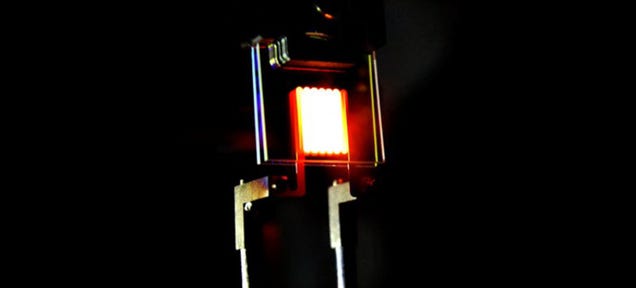
This New Incandescent Bulb Uses Nano Mirrors to Match LED Efficiency

This New Incandescent Bulb Uses Nano Mirrors to Match LED Efficiency:

jpdakqliibnn45yfdou3.jpg
Energy-saving bulbs may have some competition in the shape of an ageing technology. Scientists have developed a new kind of incandescent light bulb that uses modern science to ramp up its efficiency, almost matching that of commercial LED bulbs.

Read more...


a2t.imga2t2.imgmf.gif


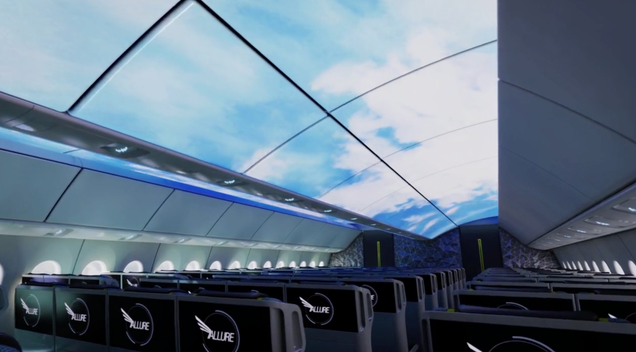
Boeing Wants to Turn the Interiors of Its Planes Into Giant Screens

Boeing Wants to Turn the Interiors of Its Planes Into Giant Screens:

x4twgefmy2vow68czzvg.png
The use of mood lighting on planes has almost become cliché—ahem, Virgin—but what if airlines could take that idea a bit further, actually using LEDs and projected imagery to wholly improve the flying experience? Boeing has a pretty great idea for what a well-lit plane of the future might feel like.

Read more...


a2t.imga2t2.imgmf.gif